
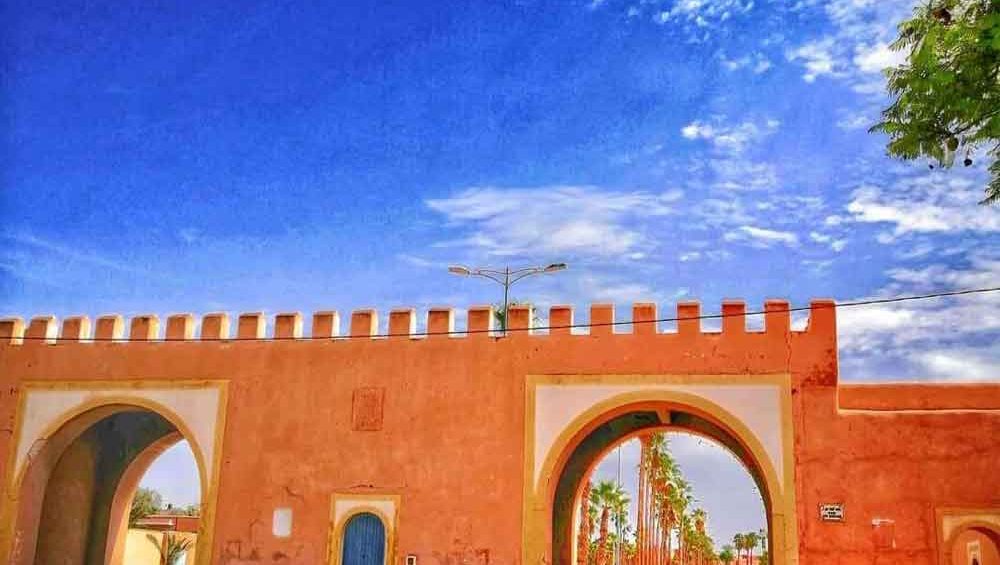
Draa Valley — Wikipedia is one of the most flavour-layered and historically rich of any Mediterranean or North African culinary traditions, shaped by Amazigh cooking techniques, Arab spice trading routes, Andalusian exile traditions, and sub-Saharan trade influences into a cuisine that uses complex spice combinations to produce deep, aromatic dishes that resist simple categorisation. Visitors who arrive expecting a single-dish cuisine — tagine and nothing else — discover a much wider picture within the first few meals.
Tagine
The tagine — named for the conical clay pot in which it slow-cooks — is less a single dish than a method applied to dozens of ingredient combinations. Chicken with preserved lemon and olives, lamb with prunes and almonds, kefta meatballs in spiced tomato sauce, and entirely vegetable versions with seasonal produce are the most common, each producing a sauce that is worth soaking up with khobz flatbread. The quality varies enormously between tourist-facing restaurants and the places where local workers eat, and asking your guide for a recommendation rather than following signage is invariably the better approach.
Couscous on Fridays
Couscous, properly prepared by steaming rather than boiling, is the traditional Friday family dish across Morocco, served with seven vegetables and a generous broth poured over at the table. Finding it on a Friday in a family restaurant rather than a tourist dining room gives the closest approximation to its domestic context. The cooking class we offer through our 2-Day Desert Tour: Fes to Marrakech page includes couscous preparation as one of the primary dishes.
Street Food
Morocco’s street food is exceptional and inexpensive. Msemen flatbreads, fresh from a griddle, are the default Marrakech breakfast; grilled merguez sausage sandwiches are the midday snack; and the Djemaa el-Fna food stalls at night offer a complete meal for little money. Bessara, a thick fava bean soup with olive oil and cumin, is the working man’s breakfast in Fes and is one of the most satisfying street dishes in the entire country.
Mint Tea and Moroccan Hospitality
The mint tea ceremony — poured from height to create a light foam, served in three rounds of increasing sweetness — is the medium through which Moroccan hospitality is expressed and business is conducted. Refusing all three glasses is a social miscalculation; accepting at least one is both the courteous and correct response in any shop, guesthouse, or home. Our Sandboarding in the Sahara and 5-Day Tour: Tangier to Fes both include guide introductions to food culture. See our Full Day Sightseeing Tour: Marrakech for the full Morocco experience catalogue.